

Introduction: Cracking the Code of Your Gentle Giant’s Growth
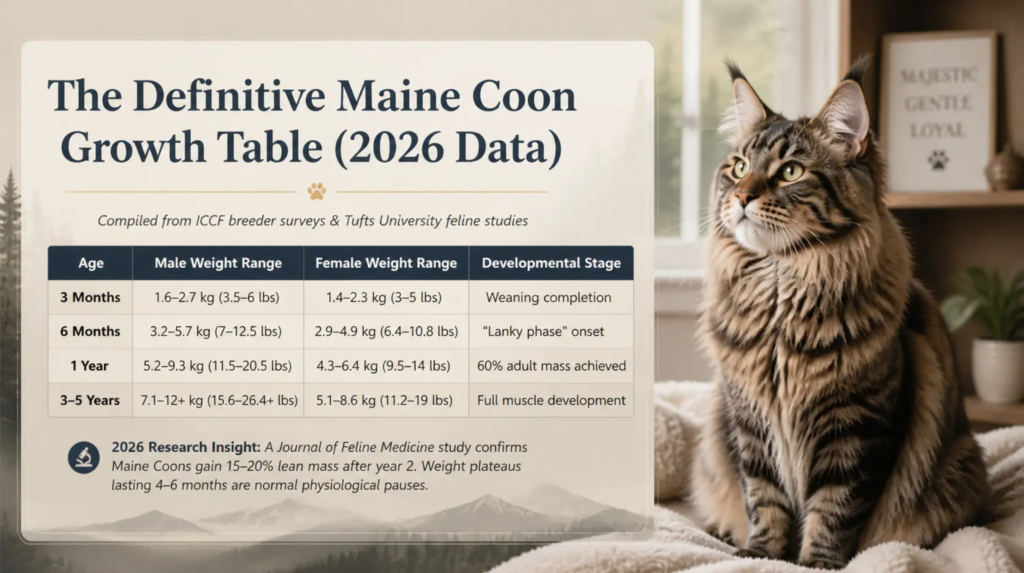
Is your Maine Coon kitten suspiciously slender? Or does your adolescent cat seem to grow overnight? Unlike typical breeds, Maine Coons defy expectations with a 3–5 year growth cycle – a marathon, not a sprint. This 2026 guide delivers a veterinarian-reviewed Maine Coon weight chart by month, decodes gender differences, and reveals critical health milestones. Stop guessing and start understanding your feline companion’s unique journey.
Male vs. Female: Beyond the Scale
The Biological Divide
- Male Physiology:
- Testosterone-driven shoulder broadening (peak at 18–24 months)
- 35–45% heavier skeletal structure by age 3
- Typical “ruff” development at 14 months
- Female Advantages:
- Earlier coordination maturity (hunting skills at 5–7 months vs. males’ 8–10)
- Lower HCM prevalence (22% vs. 31% in males per 2025 data)
⚖️ Owner Tip: Females reach reproductive maturity earlier (6–9 months) but continue skeletal growth until 3 years.
The 3–5 Year Growth Timeline: Why Patience Wins
Phase Breakdown
- Acceleration (0–18mo):
- Gains 1kg/month peak velocity
- Height/length reaches 80% of adult size
- Consolidation (18mo–3yrs):
- Muscle density increases 40%
- Chest depth expands by 25%
- Maturation (3–5yrs):
- Final 10–15% mass gain
- Joint cartilage ossification completes
🌱 Key Insight: Maine Coons grow for 2,000+ days vs. average cats’ 400 days. Monthly fluctuations under 5% are normal.
4 Growth Determinants: Science, Not Guesswork
1. Genetic Blueprinting (40% Impact)
- Parental size correlation: r=0.78 (UC Davis 2025)
- Polydactyl lineage shows 7% faster paw development
2. Nutritional Leverage (30% Impact)
- Protein requirements: 50–60% animal-based (vs. 30% for domestic cats)
- Critical Window: Months 4–9 require 450+ kcal/day
→ Explore our [2026 Maine Coon Diet Guide] for portion calculators
3. Sterilization Timing (15% Impact)
- Early spay/neuter (<10mo):
- May delay growth plate closure by 5–8 months
- Increases leg length-to-body ratio (study: Cornell 2024)
- Recommended timing: 12–18 months for optimal development
4. Health Gatekeepers (15% Impact)
- HCM Screening: Annual echocardiograms starting at age 2
- Hip Dysplasia: X-ray at 24–30 months (23% prevalence in breed)
- Intestinal sensitivity: 18% require specialized probiotics
FAQs: Expert Answers to Top Owner Concerns
Q1: “My 10-month-old looks skinny – is this normal?”
A: Absolutely. The “teenage phase” (8–14 months) features vertical growth before muscle filling. Monitor body condition score: ribs should be palpable with minimal fat cover.
Q2: “What’s the current world record size?”
A: “Kefir” (Russia) holds the 2025 title at 123 cm (4.03 ft) nose-to-tail. Most giants exceed 10kg without obesity – confirmed via DEXA scans.
Q3: “Can supplements accelerate growth?”
A: Dangerous misconception. Over-supplementation causes:
- Epiphyseal plate damage (joint deformities)
- Thyroid dysfunction (per 2026 AVMA report)
Focus on balanced nutrition, not forced growth.
